This article contains affiliate links. If you purchase through them, we may earn a small commission at no extra cost to you.
Creatine might be the most argued-about supplement in the gym.
Some people swear it's the only thing worth buying. Others think it's just water retention and hype. Your friend says it wrecked his kidneys. Your coach says it's essential. The guy at the supplement shop says you need to "load" it for two weeks first.
Everyone has an opinion. Almost nobody has read the research.
Here's the thing: creatine is the most studied supplement in sports science history. Over 500 peer-reviewed studies. Decades of data. A very clear verdict.
Let's go through it properly.
- Creatine is not a steroid — it's a natural compound your body already produces.
- It works by increasing phosphocreatine stores in your muscles — more fuel for short, explosive efforts.
- Average strength gain: +5–15% over 4–12 weeks of use.
- Creatine monohydrate is the form backed by research. Everything else is marketing.
- Safe for long-term use. No evidence of kidney or liver damage in healthy individuals.
What Creatine Actually Is
Creatine is not a synthetic drug. It's a naturally occurring compound made from three amino acids — arginine, glycine, and methionine — and your body already produces it, mostly in the liver and kidneys.
You also get small amounts from food. Red meat and fish are the main dietary sources. A 200g steak contains roughly 1g of creatine. Your body stores most of its creatine in skeletal muscle — about 95% of it — where it plays a direct role in energy production during high-intensity exercise.
When you supplement with creatine, you're not introducing a foreign substance. You're just saturating your muscle stores beyond what diet and natural synthesis can achieve.
Your muscles can only store so much creatine naturally. Most people are at 60–80% of their maximum capacity through diet alone. Supplementing fills that remaining 20–40% — and that gap is where the performance gains come from.
How It Works in Your Body
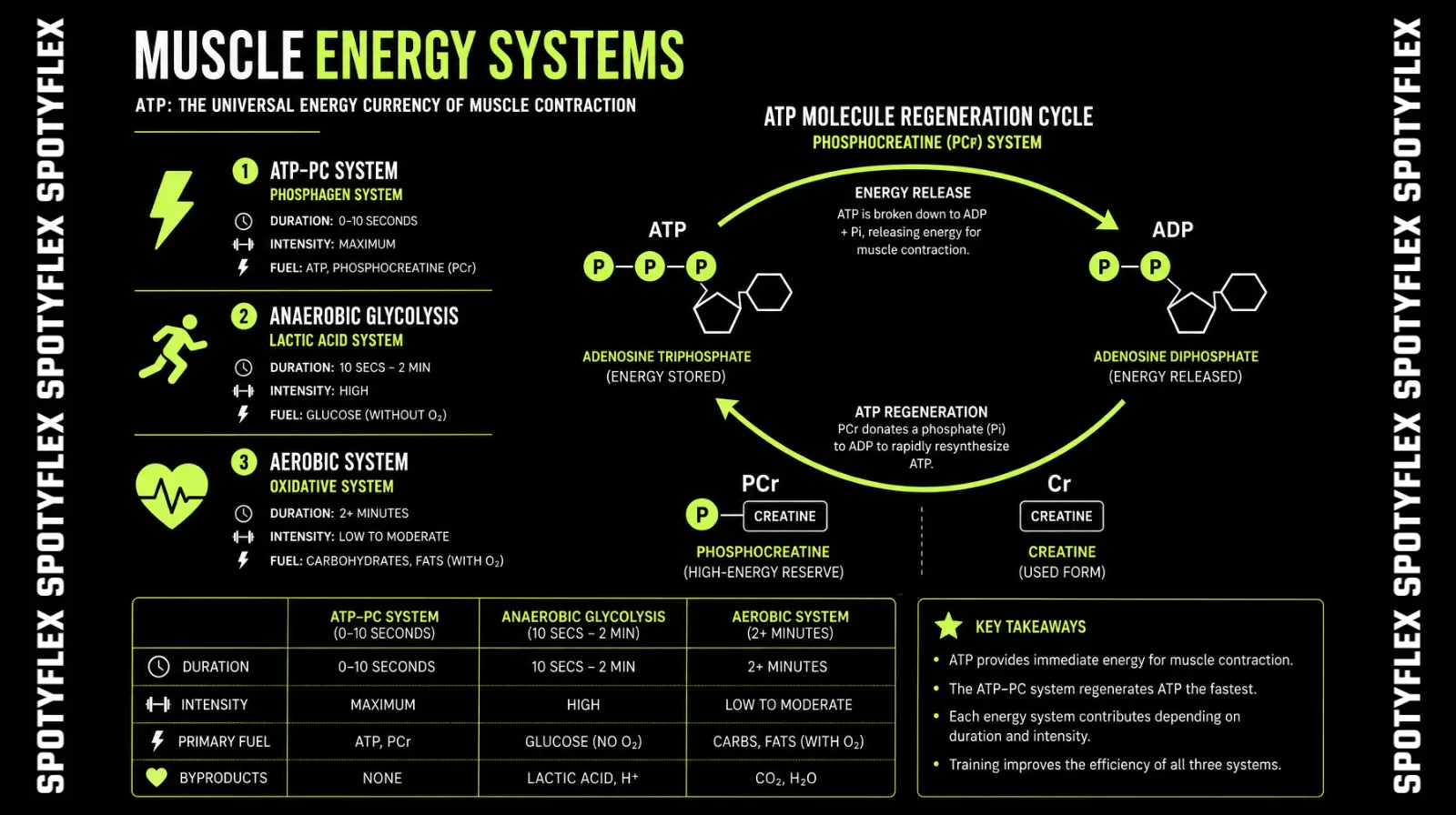
To understand creatine, you need to understand how your muscles produce energy.
Your muscles run on ATP — adenosine triphosphate. It's the universal energy currency of your cells. The problem: your muscles only store a tiny amount of ATP at any given moment. Enough for about 1–2 seconds of maximum effort.
For explosive, short-duration efforts — a heavy squat, a sprint, a max bench press — your body uses the phosphocreatine (PCr) system to rapidly regenerate ATP. Phosphocreatine donates a phosphate group to ADP, instantly converting it back to ATP.
More phosphocreatine stored in your muscles = more ATP regenerated = more reps completed before you hit the wall. That's the whole mechanism. It's not magic — it's chemistry.
Creatine supplementation increases the total phosphocreatine available in your muscles by roughly 20–40%. That directly translates to more capacity in the 5–30 second high-intensity effort range — exactly where strength training lives.
What 500+ Studies Actually Say
This is where creatine separates itself from every other supplement on the market. The research base is enormous — and unusually consistent.
A landmark meta-analysis reviewing 22 studies found that creatine supplementation combined with resistance training produced significantly greater gains in muscle strength and lean body mass compared to training alone. The gains were consistent across beginners, intermediate, and advanced lifters.
Beyond raw strength, research also shows creatine benefits:
Muscle hypertrophy. More training volume per session leads to greater muscle protein synthesis stimulus over time. The gains compound.
Recovery. Some evidence suggests creatine reduces muscle cell damage and inflammation after intense sessions, allowing for faster recovery between workouts.
Cognitive function. Emerging research shows creatine may support brain energy metabolism — particularly relevant for sleep-deprived individuals or during cognitively demanding tasks.
Older adults. Studies consistently show creatine helps preserve muscle mass and strength in people over 50, where natural creatine synthesis declines.
The International Society of Sports Nutrition (ISSN) officially classifies creatine monohydrate as the most effective ergogenic nutritional supplement currently available for increasing high-intensity exercise capacity and lean body mass. That's not a marketing claim — it's their formal position paper.
Who Benefits Most (And Who Doesn't)
Creatine works for most people — but not equally. Here's the honest breakdown:
| Who | Benefit | Notes |
|---|---|---|
| Strength & powerlifters | ✓ Strong | Direct mechanism match — exactly the energy system used |
| Bodybuilders / hypertrophy focus | ✓ Strong | More volume = more stimulus = more growth over time |
| Sprinters / team sport athletes | ✓ Strong | Repeated sprint performance improves meaningfully |
| Vegetarians / vegans | ✓ Very strong | No dietary creatine intake = larger gap to fill = bigger gains |
| Adults 50+ | ✓ Strong | Helps preserve muscle mass and functional strength |
| Endurance athletes (marathon, cycling) | △ Modest | PCr system not primary fuel — some benefits in sprint finishes |
| Non-responders (~25–30% of people) | ✗ Minimal | Already have near-maximal muscle creatine stores naturally |
The non-responder phenomenon is real. Roughly 25–30% of people have naturally high muscle creatine levels and see little additional benefit from supplementing. There's no test for this — you just try it for 4–6 weeks and see.
How to Take It: Dosing & Timing
There are two approaches that work. Here's the honest comparison:
Research shows timing matters less than consistency. Taking creatine post-workout may have a slight edge over pre-workout based on one study, but the effect is small. The most important thing is taking it every day. Mix it in your protein shake, your water, your coffee — whatever makes it a habit.
Which Form to Buy
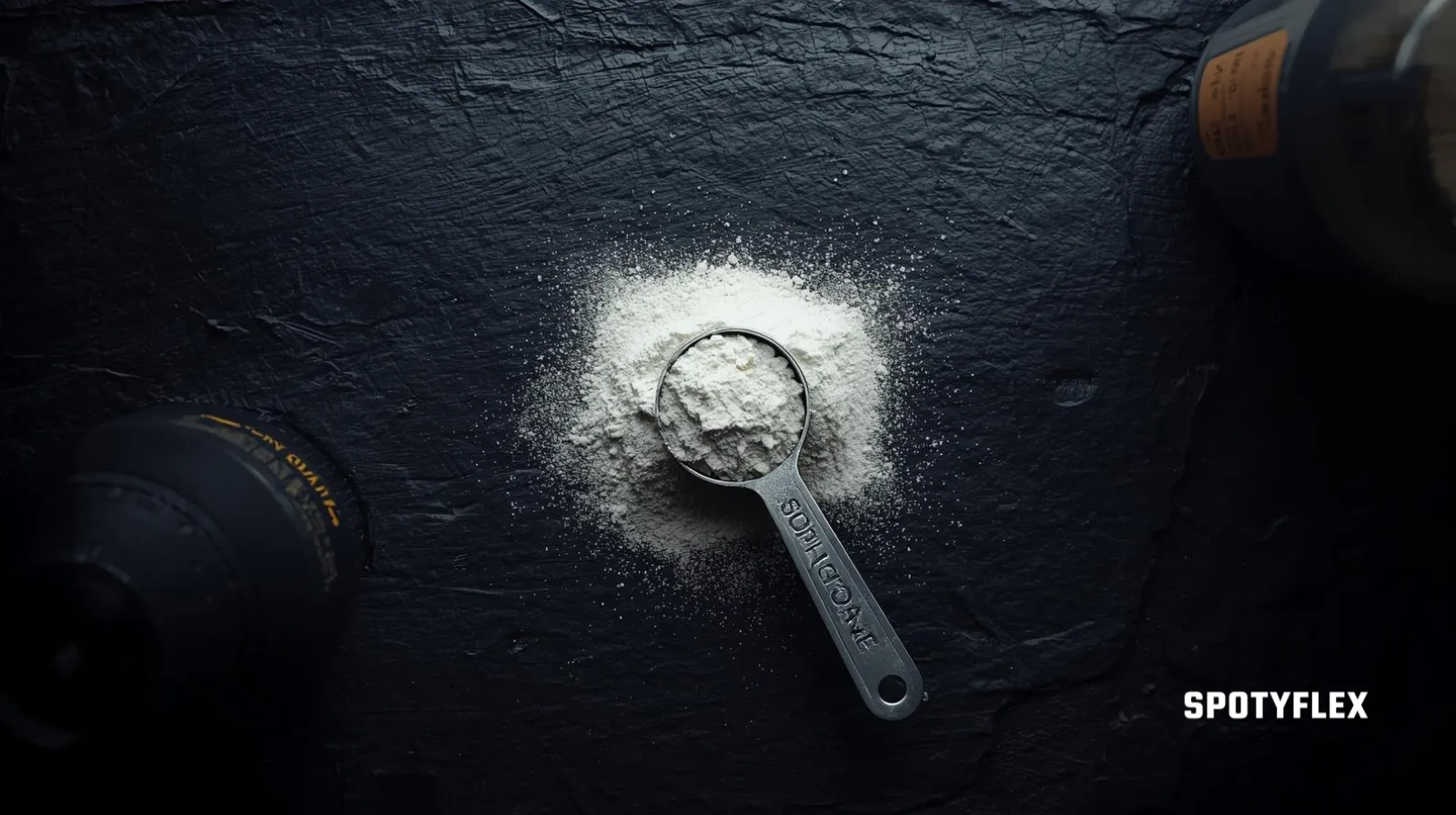
The supplement industry has produced dozens of "advanced" creatine forms over the years — creatine HCl, buffered creatine (Kre-Alkalyn), creatine ethyl ester, creatine nitrate, and more. They're all priced higher than monohydrate and marketed as superior.
The research tells a different story.
Creatine monohydrate remains the gold standard. It's the most studied, most bioavailable, and most cost-effective form. No other variant has demonstrated superior muscle creatine saturation or better performance outcomes in head-to-head trials.
What to look for when buying:
Creapure® certification — a quality mark indicating pharmaceutical-grade purity, manufactured in Germany. Not required, but a reliable signal of quality.
No proprietary blends — you want pure creatine monohydrate, not a "performance matrix" where the creatine dose is hidden.
Unflavored — flavored versions often contain unnecessary sugars and sweeteners. Buy unflavored, mix it into anything.
Nutricost Creatine Monohydrate is exactly what this article recommends —
pure micronized monohydrate, 5g per serving, 100 servings per bag,
no fillers, no proprietary blends. Clean, affordable, and it works.
→ Check price on Amazon
Creatine HCl, Kre-Alkalyn, creatine ethyl ester, or any "next generation" creatine form. None of them have outperformed plain monohydrate in controlled trials. They exist to charge you more. 3–5g of creatine monohydrate daily is all you need.
5 Creatine Myths, Debunked
More misinformation surrounds creatine than almost any other supplement. Here are the five you'll encounter most often:
Side Effects: What's Real, What Isn't
Creatine has an exceptional safety profile. Decades of research with thousands of subjects across age groups has not identified any serious adverse effects in healthy individuals using recommended doses.
The effects that are real:
Water weight gain (1–2kg). This is expected, normal, and reverses if you stop. It's intramuscular water, not fat.
GI discomfort during loading. Some people experience bloating or stomach cramps when taking large loading doses (20g/day). The fix is to skip the loading phase — 3–5g/day from the start avoids this entirely.
Creatinine elevation on blood tests. If you're getting bloodwork done, tell your doctor you take creatine. Elevated creatinine from supplementation can falsely suggest kidney stress to a physician who doesn't know the context.
If you have pre-existing kidney disease, consult your doctor before taking creatine. The standard safety data applies to healthy individuals. This is not a concern for healthy people, but it's worth flagging.
Take It.
It Works.
Creatine monohydrate is the single most evidence-backed supplement available. 3–5g a day. No loading required. No cycling. Buy the cheapest pure monohydrate you can find. The research doesn't get clearer than this.
The supplement industry is full of expensive promises and thin evidence. Creatine is the exception — it's cheap, safe, well-understood, and it works for the majority of people who train seriously.
If you only ever buy one supplement, make it this one.
Frequently Asked Questions
Do I need to load creatine?
No. Loading saturates your muscles faster (~1 week vs ~4 weeks), but both approaches reach the same endpoint. If you want results slightly sooner and don't mind mild bloating, load. Otherwise just take 3–5g daily from day one.
Should I take creatine on rest days?
Yes. Maintaining daily intake keeps your muscle creatine stores saturated. Skipping rest days slightly depletes stores over time. It doesn't matter when you take it on rest days.
Can I take creatine with caffeine?
Early research suggested caffeine might blunt creatine's effects, but more recent studies haven't confirmed this. Taking them together in a pre-workout is fine for most people.
How long before I notice results?
If loading: performance effects within 1 week. If not loading: 3–4 weeks to full saturation, with noticeable strength improvements typically appearing around week 4–6 when combined with consistent training.
Is creatine safe for teenagers?
The research is primarily in adults. Most sports nutrition bodies recommend waiting until adulthood before supplementing, not because creatine is dangerous, but because young athletes should focus on diet and training fundamentals first.
- Rawson ES, Volek JS. Effects of creatine supplementation and resistance training on muscle strength and weightlifting performance. PubMed — Journal of Strength and Conditioning Research, 2003
- Lanhers C, et al. Creatine supplementation and lower limb strength performance: a systematic review and meta-analyses. PubMed — British Journal of Sports Medicine, 2015
- Kreider RB, et al. International Society of Sports Nutrition position stand: safety and efficacy of creatine supplementation in exercise, sport, and medicine. PubMed — Journal of the International Society of Sports Nutrition, 2017
- Antonio J, Ciccone V. The effects of pre versus post workout supplementation of creatine monohydrate on body composition and strength. PubMed — Journal of the International Society of Sports Nutrition, 2013
- Comprehensive evidence summary on creatine supplementation and performance. Examine.com — Creatine
Younes Ouba
Founder of SpotyFlex, Full-Stack Developer & lifelong fitness enthusiast. I build the platform and the content. The goal is always the same: real fitness knowledge, zero BS.