You're training hard — but if you're not eating right around your workouts, you're leaving results on the table. This guide breaks down exactly what to eat before and after exercise, when to eat it, and what happens to your body if you skip it. No complicated protocols. Just clear, actionable nutrition you can actually follow.
Why Workout Nutrition Matters
Exercise is a stress on the body — a productive one, but stress nonetheless. When you train, you deplete stored energy (glycogen), create micro-tears in muscle fibers, and trigger a cascade of hormonal changes. What you eat around your workouts directly determines how well your body responds to all of that.
Eat right before training and you perform better — more reps, more intensity, better focus. Eat right after and you recover faster — muscle gets rebuilt stronger, soreness is reduced, and you're ready for the next session sooner.
The good news? You don't need to obsess over exact timing windows or expensive supplements. The basics — the right foods, eaten at roughly the right times — do the heavy lifting.
If you haven't already nailed your daily calorie and macro targets, check out our guides on understanding a calorie deficit and understanding macros first — workout nutrition sits on top of those foundations.
What to Eat Before a Workout
Your pre-workout meal has one job: fuel your session. That means giving your body enough energy to perform and enough protein to protect your muscle tissue.
The two key macros for your pre-workout meal are:
- Carbohydrates — your body's preferred fuel for exercise, especially anything intense. Carbs fill your glycogen stores (the energy tank your muscles pull from during training).
- Protein — stimulates muscle protein synthesis and reduces muscle breakdown during the session.
Fat is fine in your pre-workout meal, but keep it moderate — fat slows gastric emptying, meaning the food will still be sitting in your stomach mid-workout. Same goes for very high-fiber foods. Save the avocado and full salad for after.

For most people, a meal in the range of 300–500 calories with around 30–50g of carbs and 20–30g of protein before training hits the sweet spot.
Pre-Workout Meal Timing
Timing matters because your body needs time to digest. Here's a simple framework:
- 2–3 hours before: Eat a full, balanced meal (rice + chicken, oats + eggs, etc.). This is the ideal window.
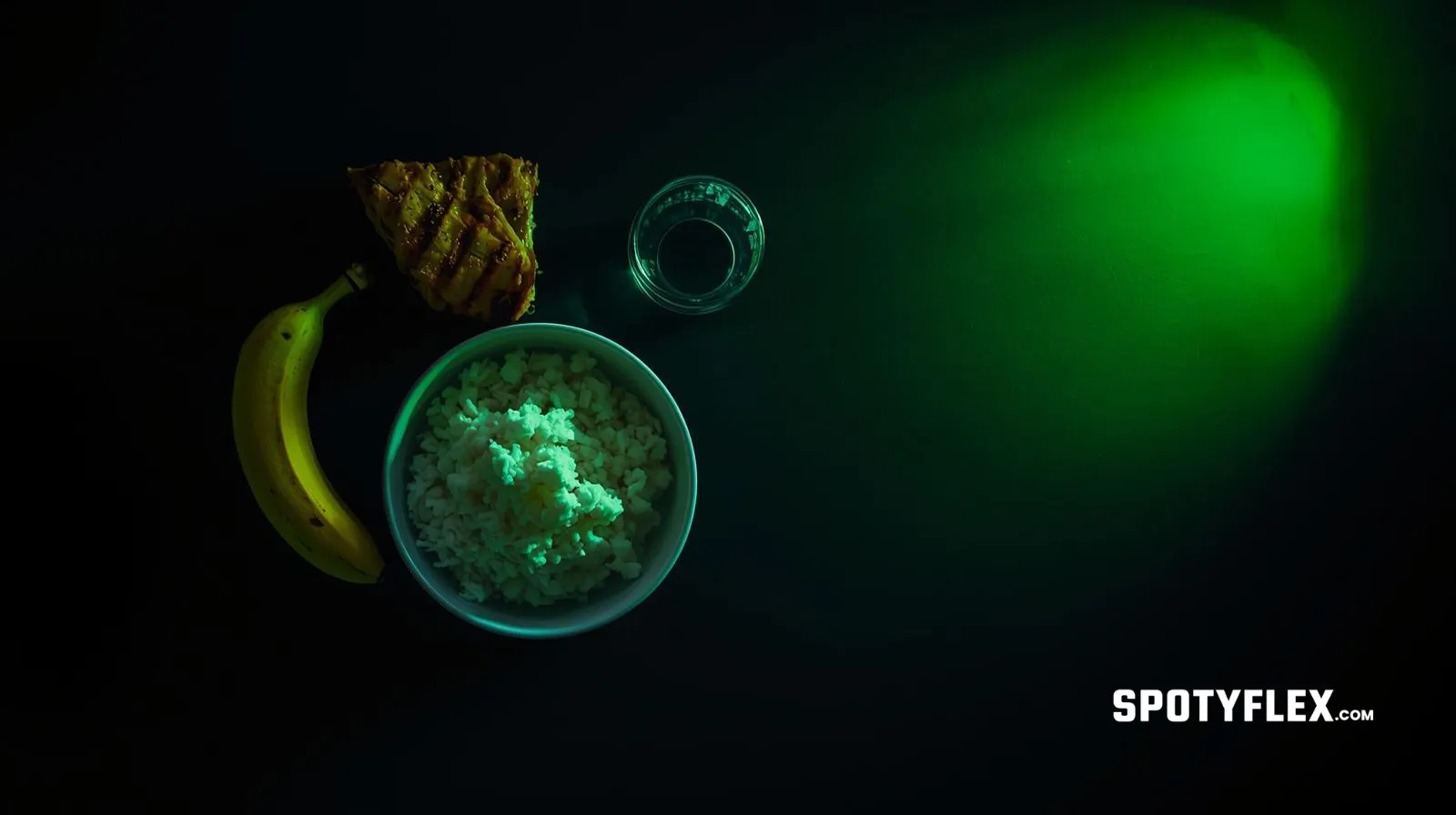
- 60–90 minutes before: Eat a smaller, easier-to-digest snack — a banana and protein shake, rice cakes with peanut butter, or yogurt with fruit.
- 30 minutes or less before: Keep it very small and fast — a banana, a handful of dates, or a small rice cake. Anything heavy will sit like a brick.
If you train first thing in the morning and can't eat a full meal, a banana or small snack is better than nothing — especially for strength training. We cover this more in the fasted training section below.
Best Pre-Workout Meal Ideas
Here are simple, proven options organized by how much time you have:
2–3 Hours Before Training
- Oatmeal with banana and a scoop of protein powder
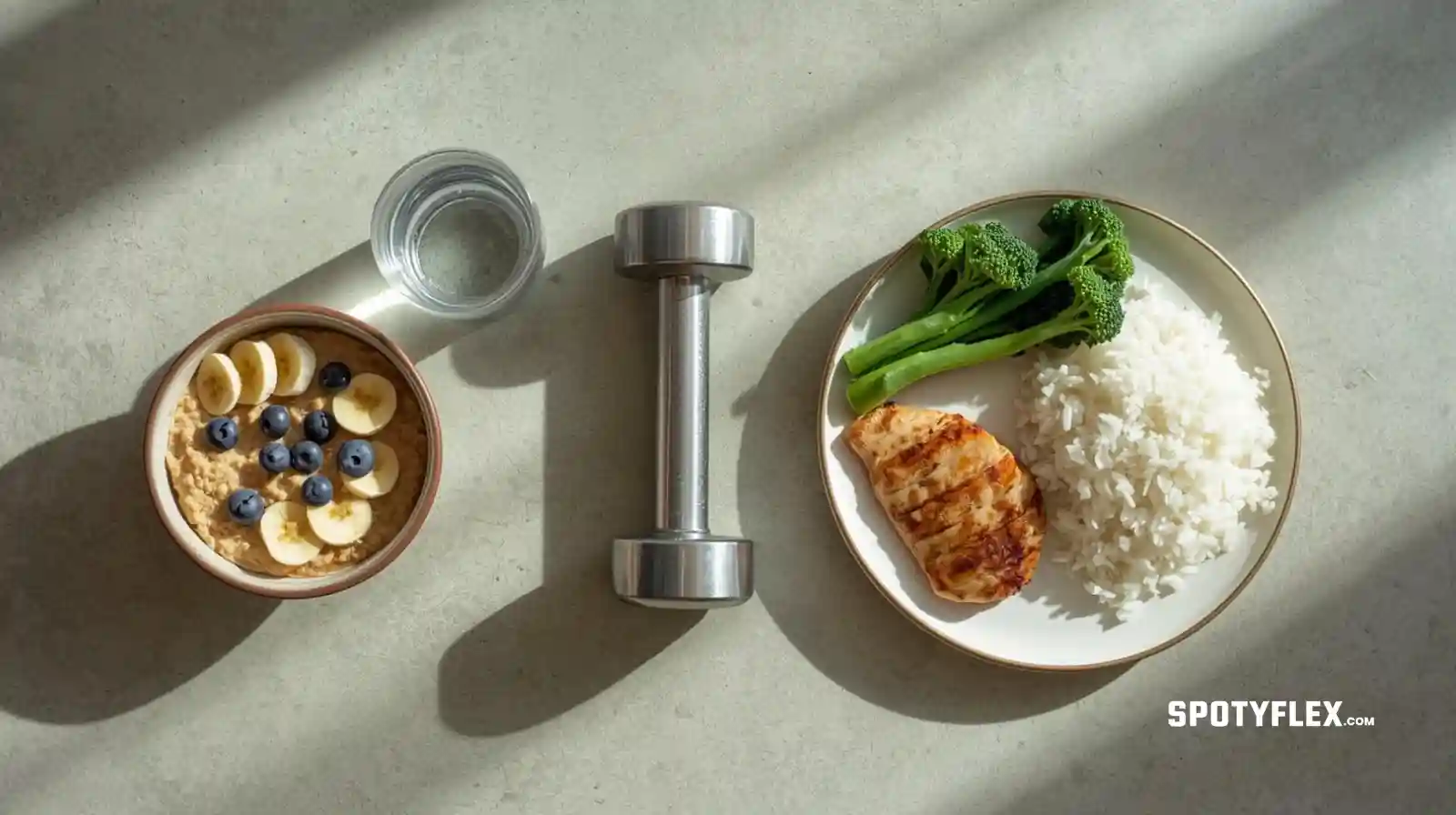
- White rice + grilled chicken + a small piece of fruit
- Whole grain toast + eggs + sliced avocado (light on the avocado)
- Greek yogurt + granola + berries
- Pasta (light portion) with a lean protein source
30–60 Minutes Before Training
- Banana + protein shake
- Rice cakes with peanut butter and honey
- A small bowl of oats with milk
- Fruit smoothie with Greek yogurt
These options pair well with the targets in our macro calculator — use it to dial in exact portions based on your goal.
What to Eat After a Workout
After training, your body enters a recovery state. Glycogen is depleted, muscle tissue has been broken down, and your body is primed to absorb nutrients — particularly protein and carbohydrates.
Your post-workout meal has two jobs:
- Rebuild muscle — protein provides the amino acids needed to repair the micro-tears from training and build new, stronger muscle tissue.
- Replenish glycogen — carbohydrates refill your energy stores so you're ready for your next session.
This is arguably the most important meal of the day for anyone training seriously. Skipping it — or replacing it with just a protein shake — is one of the most common nutrition mistakes that stalls progress.
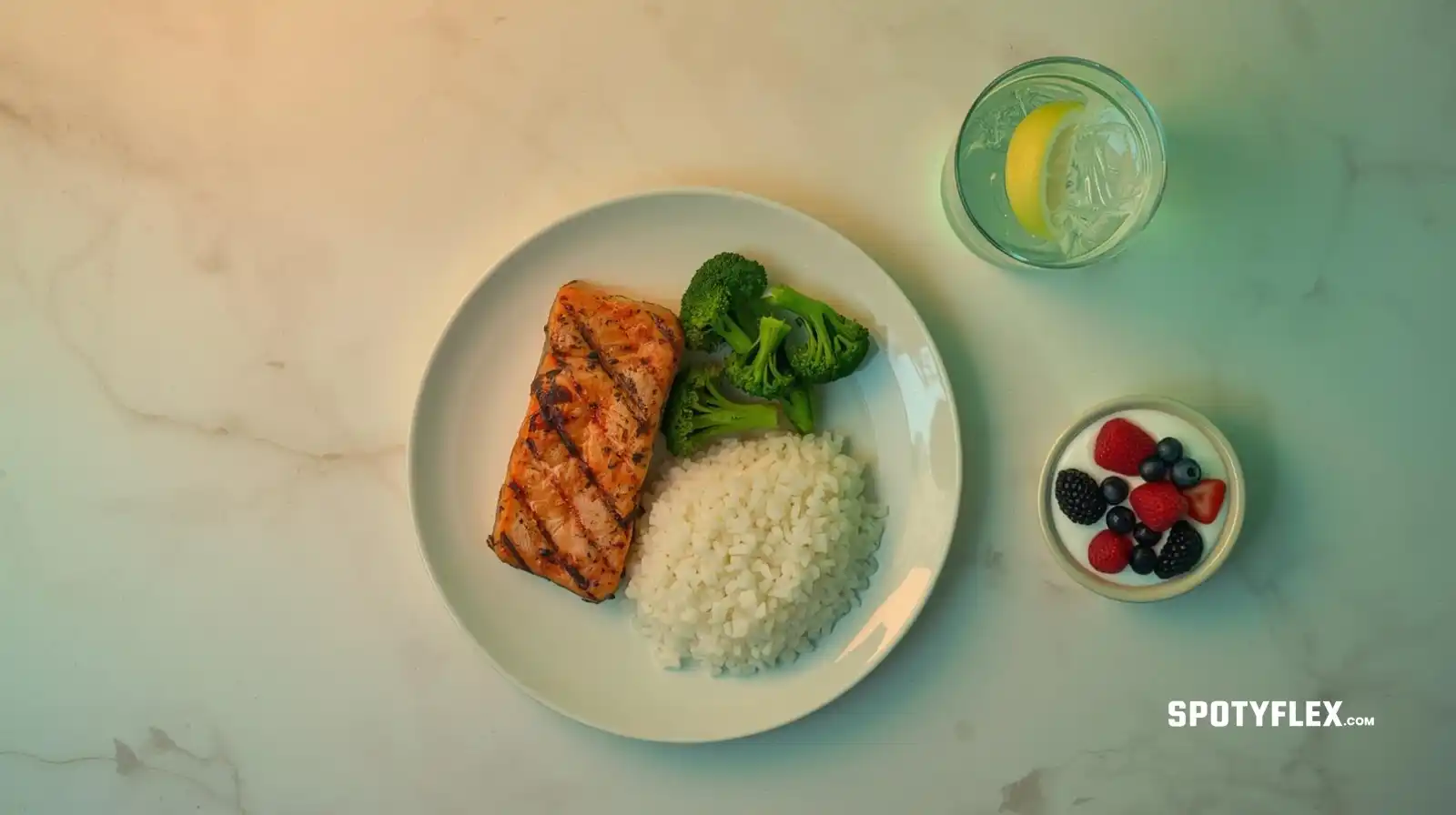
Aim for 25–40g of protein and 40–60g of carbohydrates in your post-workout meal. If you're in a calorie deficit for fat loss, you can adjust the carb portion downward — just don't skip the protein. See our guide on how much protein you actually need for the full breakdown.
Post-Workout Meal Timing
You may have heard about the "anabolic window" — the idea that you must eat within 30 minutes after training or you'll miss gains. The research on this is more nuanced than the gym lore suggests.
The current evidence points to a wider window: eating within 1–2 hours after training is sufficient for most people. The urgency is higher if you trained fasted (empty stomach) and lower if you had a solid pre-workout meal.
The practical rule: don't wait more than 2 hours after training to eat. Get a protein-rich meal in as soon as it's convenient. If you're rushing and can't eat a full meal, a protein shake with a banana is a fine bridge until you can.
Best Post-Workout Meal Ideas
Full Meals (Within 1–2 Hours)
- Grilled chicken + white rice + steamed vegetables
- Salmon + sweet potato + salad
- Lean beef stir-fry with rice noodles and vegetables
- Eggs (3–4) with toast and a piece of fruit
- Cottage cheese + rice cakes + sliced banana
Quick Options (If You Can't Cook Right Away)
- Protein shake + banana or a handful of dates
- Greek yogurt + granola + berries
- Low-fat chocolate milk (seriously — it's a solid recovery drink)
- Tuna in a wrap with a piece of fruit
For building muscle specifically, pair these meals with a total daily protein target. Our muscle gain diet guide covers how to structure your full day of eating around training.
What About Fasted Training?

Fasted training (exercising without eating beforehand, usually in the morning) is popular with people who practice intermittent fasting. It works, particularly for low-to-moderate intensity cardio.
However, for strength training or high-intensity sessions, the evidence suggests you'll perform better — and preserve more muscle — if you have something in your system. Even a small snack (banana, a few dates, a rice cake) 15–30 minutes before training can meaningfully improve your output.
If you train fasted by choice or necessity, prioritize the post-workout meal even more. Your body has been running on empty, and getting protein and carbs in quickly after the session becomes more important.
Don't Forget Hydration
No nutrition guide is complete without mentioning water. Even mild dehydration (as little as 2% of body weight) measurably reduces strength, endurance, and focus during exercise.
- Before: Drink 400–600ml of water in the 2 hours before training.
- During: Sip 150–250ml every 15–20 minutes, more if you're sweating heavily.
- After: Rehydrate by drinking 1.5x the fluid you lost (use urine color as a guide — pale yellow is the target).
For most gym sessions under 60–90 minutes, plain water is all you need. Sports drinks and electrolytes are worth considering for longer sessions or very high-intensity training in heat.
Quick Reference: Before vs. After at a Glance
| Before Workout | After Workout | |
|---|---|---|
| Goal | Fuel performance | Rebuild muscle, replenish energy |
| Key Macros | Carbs + Protein | Protein + Carbs |
| Protein Target | 20–30g | 25–40g |
| Carb Target | 30–50g | 40–60g |
| Timing | 1–3 hours before | Within 1–2 hours after |
| Keep Low | Fat, fiber | Nothing to avoid |
| Quick Option | Banana + protein shake | Greek yogurt + granola |
Key Takeaways
- Eat carbs + protein 1–3 hours before training to fuel performance.
- Keep fat and fiber low in your pre-workout meal to avoid digestion issues.
- Eat protein + carbs within 1–2 hours after training for recovery.
- The post-workout "window" is real but flexible — don't panic if you can't eat within 30 minutes.
- Fasted training is fine for cardio; for strength work, at least eat a small snack beforehand.
- Hydration matters as much as food — don't train dehydrated.
- These principles work best when your overall daily nutrition is on track. Use the TDEE calculator to find your starting point.
Frequently Asked Questions
What should I eat before a workout?
Eat a meal with carbohydrates and protein 1–3 hours before training. Good options: oats with banana, rice with chicken, whole grain toast with eggs. Avoid heavy fat or fiber-rich foods close to training time.
What should I eat after a workout?
Eat a protein-rich meal with carbohydrates within 1–2 hours after training. Aim for 25–40g of protein and 40–60g of carbs. Options: chicken and rice, Greek yogurt with fruit, salmon and sweet potato, or a protein shake with a banana.
How long before a workout should I eat?
Ideally 2–3 hours before for a full meal. If you're short on time, a small snack (banana, rice cake with peanut butter) 30–60 minutes before works well too.
Can I work out on an empty stomach?
Fasted cardio works for many people and has some fat-burning benefits. For strength training or high-intensity workouts, eating beforehand improves performance and reduces muscle breakdown. At minimum, have a small snack like a banana before lifting.
Is a protein shake enough after a workout?
A protein shake covers the protein requirement but doesn't replenish glycogen. Pair it with a fast carbohydrate source like a banana or rice cakes, or follow it with a full meal within an hour. Don't rely on shakes alone as your post-workout nutrition long-term.
References
- Ivy JL. Glycogen resynthesis after exercise: effect of carbohydrate intake. Int J Sports Med. 1998;19(S2):S142–S145. doi:10.1055/s-2007-971980
- Kerksick CM, et al. International Society of Sports Nutrition position stand: nutrient timing. J Int Soc Sports Nutr. 2017;14:33. doi:10.1186/s12970-017-0189-4
- Schoenfeld BJ, Aragon AA, Krieger JW. The effect of protein timing on muscle strength and hypertrophy: a meta-analysis. J Int Soc Sports Nutr. 2013;10:53. doi:10.1186/1550-2783-10-53
- Cheuvront SN, Kenefick RW. Dehydration: physiology, assessment, and performance effects. Compr Physiol. 2014;4(1):257–285. doi:10.1002/cphy.c130017