

Here's the thing nobody wants to hear.
The person jogging slowly at the back of the running trail? The one you pass easily, barely sweating? They might be getting a better fat-burning workout than you.
Not because they're fitter. Because they understand something most gym-goers don't.
Your body burns fat most efficiently at a specific, surprisingly low intensity. Go too hard — and you switch fuel sources. You stop burning fat and start burning carbs instead.
Slow your cardio down. Stay in the zone. Give it 8 weeks.
Your mitochondria will do the rest.
- Zone 2 is 60-70% of your maximum heart rate.
- It prioritizes fat oxidation over carbohydrate burning.
- Builds mitochondrial density, improving metabolic health long-term.
- The "Talk Test": You should be able to hold a full conversation.
Everyone Is Training Too Hard
Walk into any gym during cardio hour and you'll see the same thing: people pushing at 80–90% effort. Red-faced, gasping, grinding. They think that the harder they go, the more fat they burn.
It feels logical. More effort = more calories = more fat loss. Right?
Not exactly.
When you train at high intensity, your body shifts away from fat as its primary fuel. It can't process fat fast enough to meet the energy demand. So it switches to glycogen — the carbohydrate stored in your muscles. You're burning calories, yes. But the calories coming predominantly from carbs, not fat.
The result? You finish your session exhausted, hungry, and craving carbs — because your glycogen stores are depleted. You eat more. The deficit you worked for shrinks or disappears entirely.
There's a smarter way.
Your body has two main fuel sources: fat and glycogen (carbs). The ratio of which one you burn depends almost entirely on your exercise intensity. Zone 2 is the sweet spot where fat dominates.
What Zone 2 Actually Is
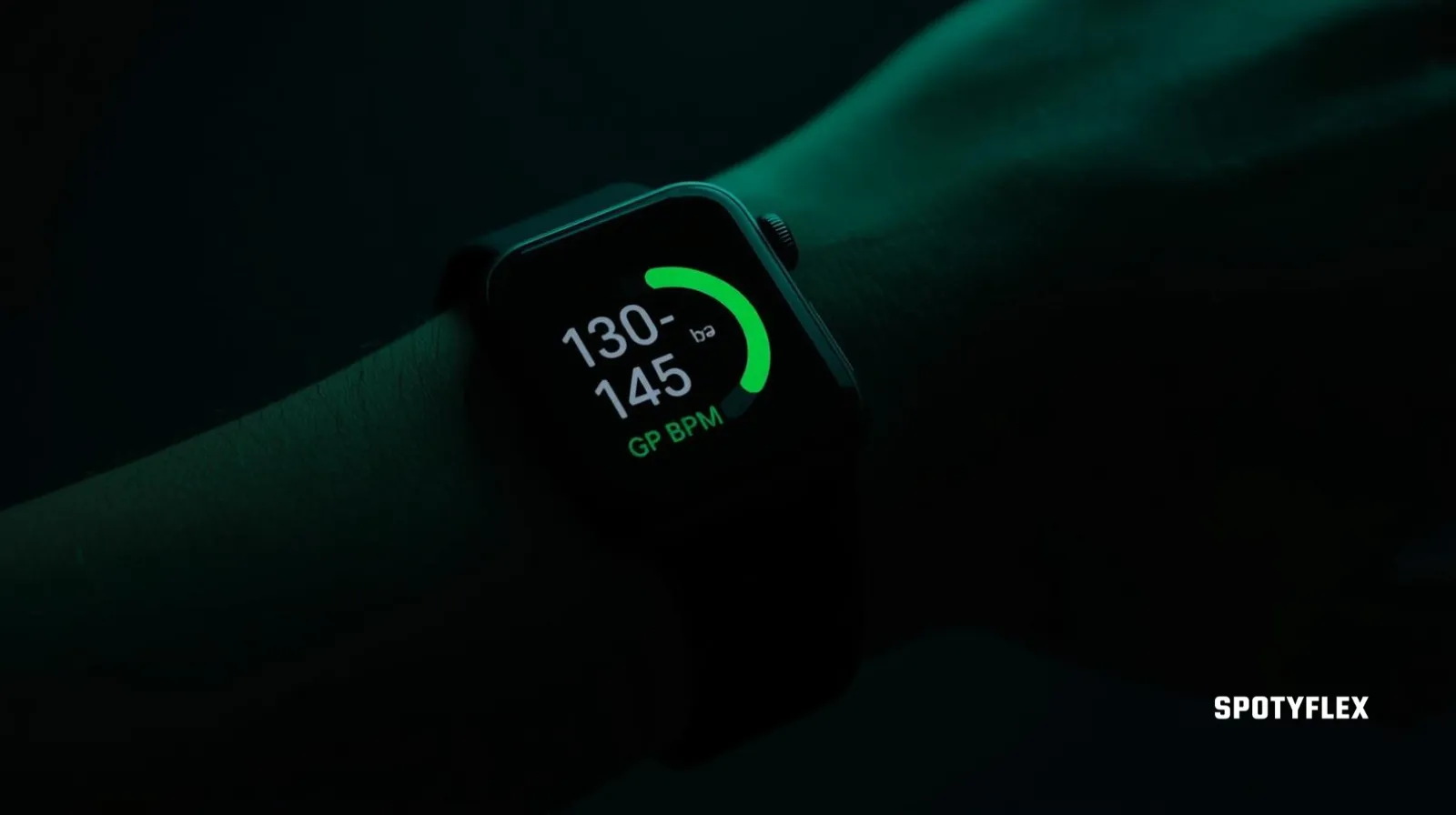
Zone 2 is the second of five heart rate training zones. It sits at roughly 60–70% of your maximum heart rate — an effort level that feels easy to moderate. Comfortable, but not a stroll.
At this intensity, your aerobic system is running efficiently. Your mitochondria — the energy factories inside your cells — are working at their optimal fat-burning rate. You're getting enough oxygen to process fat as fuel without needing to switch to faster-burning carbohydrates.
It's the zone where elite endurance athletes spend the majority of their training time. Not because it's easy — but because the metabolic adaptations it creates are profound and compounding.
And for fat loss specifically, it's where the magic lives.
The 5 Heart Rate Zones Explained
Heart rate zones are simply a way of categorizing exercise intensity. Here's the full breakdown — and why Zone 2 stands out:
Most recreational gym-goers accidentally spend their cardio sessions in Zone 3 and 4 — working hard enough to shift fuel sources away from fat, but not hard enough to get the performance benefits of true high-intensity training. It's the worst of both worlds. Zone 2 fixes that.
Why Zone 2 Burns More Fat at the Cellular Level
This is where it gets interesting.
Your cells contain mitochondria — tiny structures that convert fuel into energy. The more efficient and numerous your mitochondria, the better your body is at burning fat. This is called mitochondrial density, and Zone 2 training directly increases it.
When you consistently train in Zone 2, your body adapts over weeks and months:
More mitochondria per cell. Your muscles literally grow more energy factories. More mitochondria = more fat burned at rest and during exercise.
Better fat oxidation efficiency. Your body gets better at accessing and processing fat as fuel — even during higher-intensity exercise and at rest.
Improved insulin sensitivity. Zone 2 training enhances how your cells respond to insulin, which plays a direct role in fat storage and fat release.
Lower cortisol response. Unlike high-intensity training, Zone 2 doesn't spike cortisol — the stress hormone that can promote fat storage around the abdomen.
How to Find Your Zone 2
Zone 2 sits at 60–70% of your maximum heart rate (MHR). Here's how to calculate yours:
Example — 25 year old: MHR = 195 bpm → Zone 2 = 117–137 bpm
If you have a fitness tracker or smartwatch, use the heart rate display in real time. Stay within that range throughout your session. If your heart rate climbs above the upper limit — slow down. That's the whole game.
Most people find Zone 2 frustratingly slow at first. You'll feel like you're not working hard enough. That feeling is correct. Zone 2 is meant to feel easy. If it doesn't feel easy, you're not in Zone 2.
The Talk Test: The Easiest Way to Know

Don't have a heart rate monitor? No problem. The talk test is almost as accurate — and it's been used by coaches for decades.
During Zone 2 training, you should be able to hold a full conversation without gasping mid-sentence. Not just a word or two — a full back-and-forth conversation. Complete sentences. Comfortable breathing.
If you can only manage short phrases between breaths, you've crossed into Zone 3. Slow down.
If you could sing, you're in Zone 1. Speed up slightly.
Full conversation = Zone 2. It's that simple.
How Much Zone 2 Do You Actually Need?
Research from endurance sports suggests elite athletes spend 80% of their training time in Zone 2. You don't need to go that far — but the principle holds for recreational exercisers too.
For meaningful fat loss and metabolic improvements, aim for:
Sessions shorter than 30 minutes won't produce meaningful Zone 2 adaptations. Your body needs time at that intensity to trigger the cellular changes. Longer is better here — 45–60 minute sessions are the sweet spot.
The good news: Zone 2 is sustainable. Because you're not destroying yourself, you can do it consistently. That consistency is where the real results come from.
How to Add It to Your Week
Zone 2 works best as a complement to resistance training — not a replacement. Here's how to combine them without burning out:
Walking (brisk), jogging, cycling, rowing, swimming — anything that lets you control intensity precisely and sustain for 45+ minutes. Treadmill and stationary bike are ideal for beginners because you can control speed exactly and monitor heart rate easily.
Slow Down
to Burn More.
Zone 2 isn't a trend. It's how your body is actually designed to burn fat. Give it time, stay consistent, and watch your metabolism change in ways hard cardio never produced.
Zone 2 is not flashy. It doesn't feel hard. You won't be gasping at the end of a session. And that's exactly why most people skip it — and exactly why the people who don't skip it get results that last.
Slow your cardio down. Stay in the zone. Give it 8 weeks.
Your mitochondria will do the rest.
Frequently Asked Questions
Is walking considered Zone 2?
For many beginners, a brisk walk or a walk on a slight incline is enough to reach Zone 2. The key is monitoring your heart rate—if you're at 60-70% of your max, it counts!
Can I do Zone 2 every day?
Yes. Because Zone 2 is low-intensity, it requires very little recovery time. Many athletes use it daily for active recovery and aerobic base building.
Should I do Zone 2 before or after weights?
For fat loss, it's generally better to lift weights first while your glycogen stores are full, then do Zone 2 cardio afterward when your body is already primed to use fat for fuel.
- Achten J, Jeukendrup AE. Optimizing fat oxidation through exercise and diet. PubMed — Nutrition, 2004
- Holloszy JO, Coyle EF. Adaptations of skeletal muscle to endurance exercise and their metabolic consequences. PubMed — Journal of Applied Physiology, 1984
- Seiler S. What is best practice for training intensity and duration distribution in endurance athletes? PubMed — International Journal of Sports Physiology and Performance, 2010
- Weighted evidence summary on aerobic exercise and insulin sensitivity. Examine.com — Insulin Sensitivity
Younes Ouba
Founder of SpotyFlex, Full-Stack Developer & lifelong fitness enthusiast. I build the platform and the content. The goal is always the same: real fitness knowledge, zero BS.