


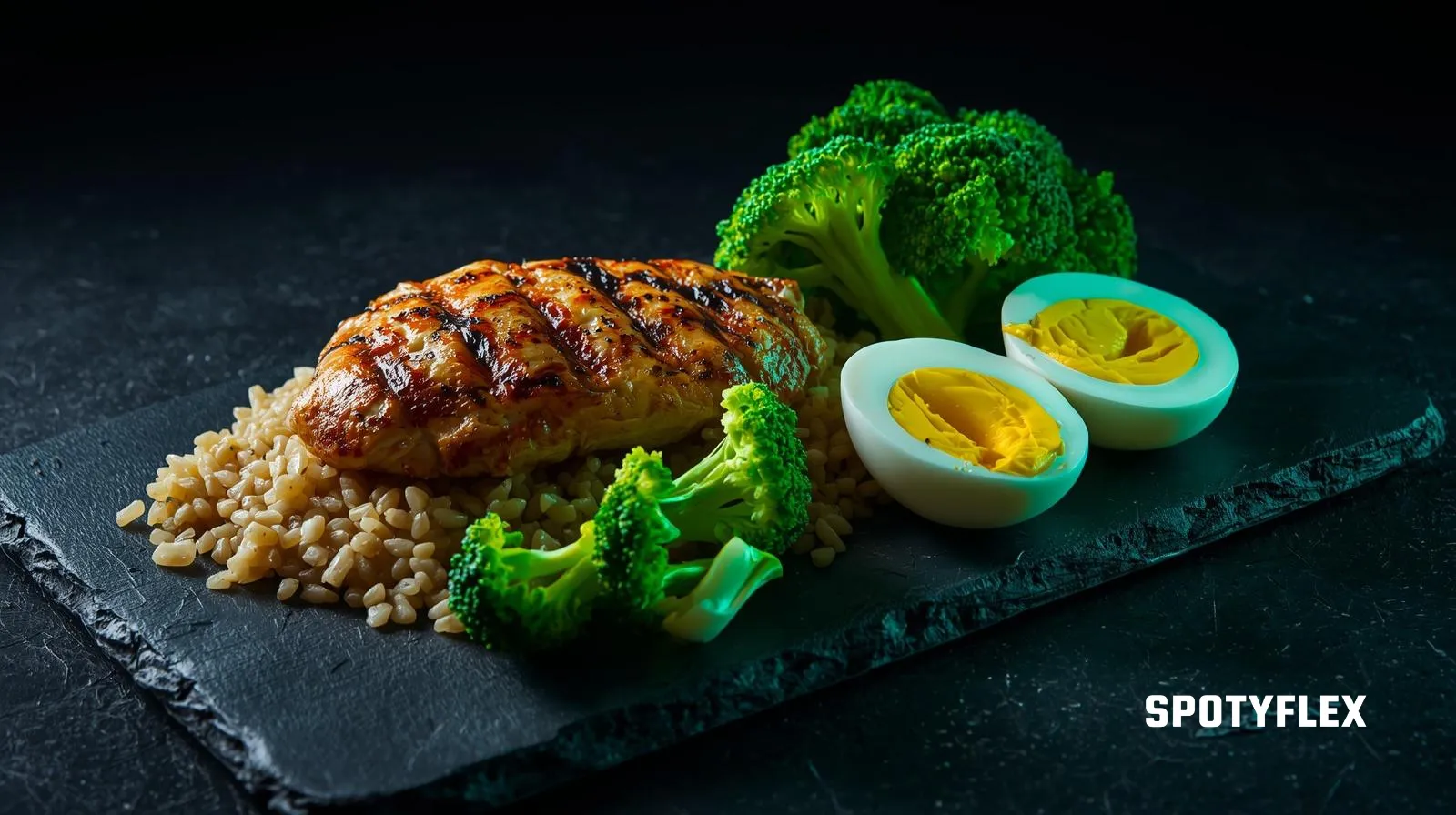
You can train perfectly.
You can sleep 9 hours every night.
You can follow every program to the letter.
But if your diet isn't right — you won't build muscle. Full stop.
Muscle doesn't come from the gym. The gym is just the trigger. Food is what your body actually uses to build with.
This guide covers exactly what to eat, how much, and how to structure it — so your training effort actually turns into muscle.
This article contains affiliate links. If you purchase through them, we may earn a small commission at no extra cost to you.
In This Article
TL;DR — The Short Version
- Eat 200–300 calories above your TDEE — enough to build, not enough to get fat
- Hit 1.6–2.2g of protein per kg of bodyweight every single day
- Carbs fuel your training — don't cut them during a muscle gain phase
- Spread protein across 3–4 meals — not one giant meal at dinner
- Consistency over weeks and months matters more than perfection on any single day
- You don't need supplements — food comes first, always
How Many Calories You Actually Need
Let's start with the most important number.
To build muscle, your body needs more energy than it burns. That's called a calorie surplus. Without it, your body simply doesn't have the fuel to build new tissue — no matter how hard you train.
But here's where most people go wrong: they eat way too much, thinking more calories = more muscle. It doesn't work that way.
Your body can only build so much muscle in a given period. Anything beyond that surplus just becomes fat. A small, controlled surplus — called a lean bulk — is the most efficient approach for most people.
| Approach | Surplus | Result |
|---|---|---|
| Maintenance | 0 cal | Minimal muscle gain, good for recomp |
| Lean Bulk ✓ | +200–300 | Steady muscle gain, minimal fat |
| Aggressive Bulk | +500–1000 | Fast weight gain, mostly fat |
| "Dirty Bulk" | Unlimited | Mostly fat. A long cut ahead. |
Not sure what your TDEE is? You need to find that number first: How to Calculate Your Maintenance Calories and TDEE →
Protein — The Most Important Macro
If calories are the fuel, protein is the building material.
When you train, you create microscopic tears in your muscle fibers. Protein provides the amino acids your body needs to repair those tears — and rebuild them slightly bigger and stronger. No protein, no repair. No repair, no growth.
This is not optional. It's biology.
Daily Protein Target
1.6–2.2g per kg of bodyweight
70kg person
112–154g / day
85kg person
136–187g / day
100kg person
160–220g / day
Our pick: Optimum Nutrition Gold Standard Whey
is consistently the most trusted whey protein on the market — high leucine content,
clean formula, and over 20 years of results behind it.
→ Check price on Amazon
One important thing: spreading protein across your meals matters. Research shows your body can only maximally use around 30–40g of protein for muscle synthesis per meal. Eating 160g all at dinner is far less effective than eating 40g across four meals.
Protein at breakfast isn't just bro science. It's one of the highest-leverage habits for muscle growth — and most people skip it.
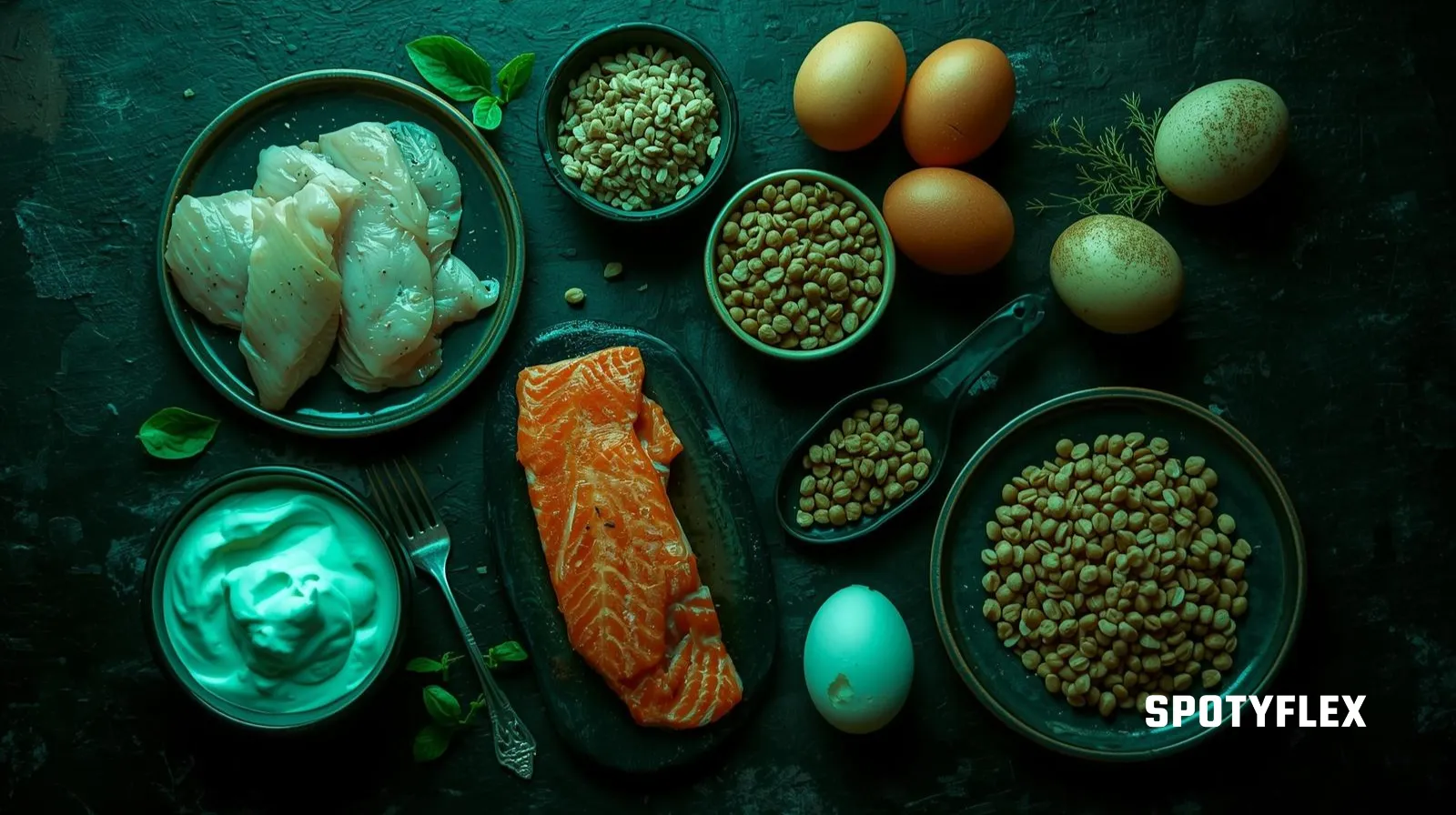
Carbs and Fats — What They Actually Do
Once protein is handled, carbs and fats fill the rest of your calories. Neither is the enemy.
Carbohydrates — Your Training Fuel
Carbs are your muscles' primary energy source during training. They get stored as glycogen in your muscles, and that glycogen is what powers your sets. Cut carbs too low and your workouts suffer — less energy, less strength, less volume, less muscle stimulus.
During a muscle gain phase, carbs should make up the majority of your calories after protein is accounted for. Don't fear them.
- Best sources: rice, oats, potatoes, pasta, bread, fruit, legumes
- Timing: higher carbs around training — before and after workouts
- Target: 3–5g per kg of bodyweight depending on training volume
Fats — Hormones and Health
Fats support testosterone production, joint health, and fat-soluble vitamin absorption. Going too low on fat tanks your hormones — and low testosterone directly hurts muscle growth.
- Best sources: eggs, olive oil, avocado, nuts, fatty fish, full-fat dairy
- Target: 20–30% of total calories
- Don't go below 0.8g per kg of bodyweight
For the full breakdown of how all three macros work together: Understanding Macros: Protein, Carbs and Fats →
The Best Foods for Muscle Gain
You don't need exotic superfoods. You need high-quality, whole foods that hit your macro targets consistently. These are the ones worth building your diet around.
Protein Sources
- 🥩 Chicken breast
- 🐟 Salmon / tuna
- 🥚 Whole eggs
- 🥛 Greek yogurt
- 🧀 Cottage cheese
- 🫘 Legumes
- 🥩 Lean beef / turkey
Carb Sources
- 🍚 White / brown rice
- 🌾 Oats
- 🥔 Sweet potatoes
- 🍝 Pasta
- 🍞 Whole grain bread
- 🍌 Bananas / fruit
- 🫘 Lentils / chickpeas
Fat Sources
- 🥑 Avocado
- 🫒 Olive oil
- 🥜 Nuts and nut butter
- 🥚 Whole eggs
- 🐟 Fatty fish
- 🧀 Full-fat dairy
Vegetables
- 🥦 Broccoli
- 🥬 Spinach / kale
- 🥕 Carrots
- 🫑 Bell peppers
- 🍅 Tomatoes
- 🧅 Onions / garlic
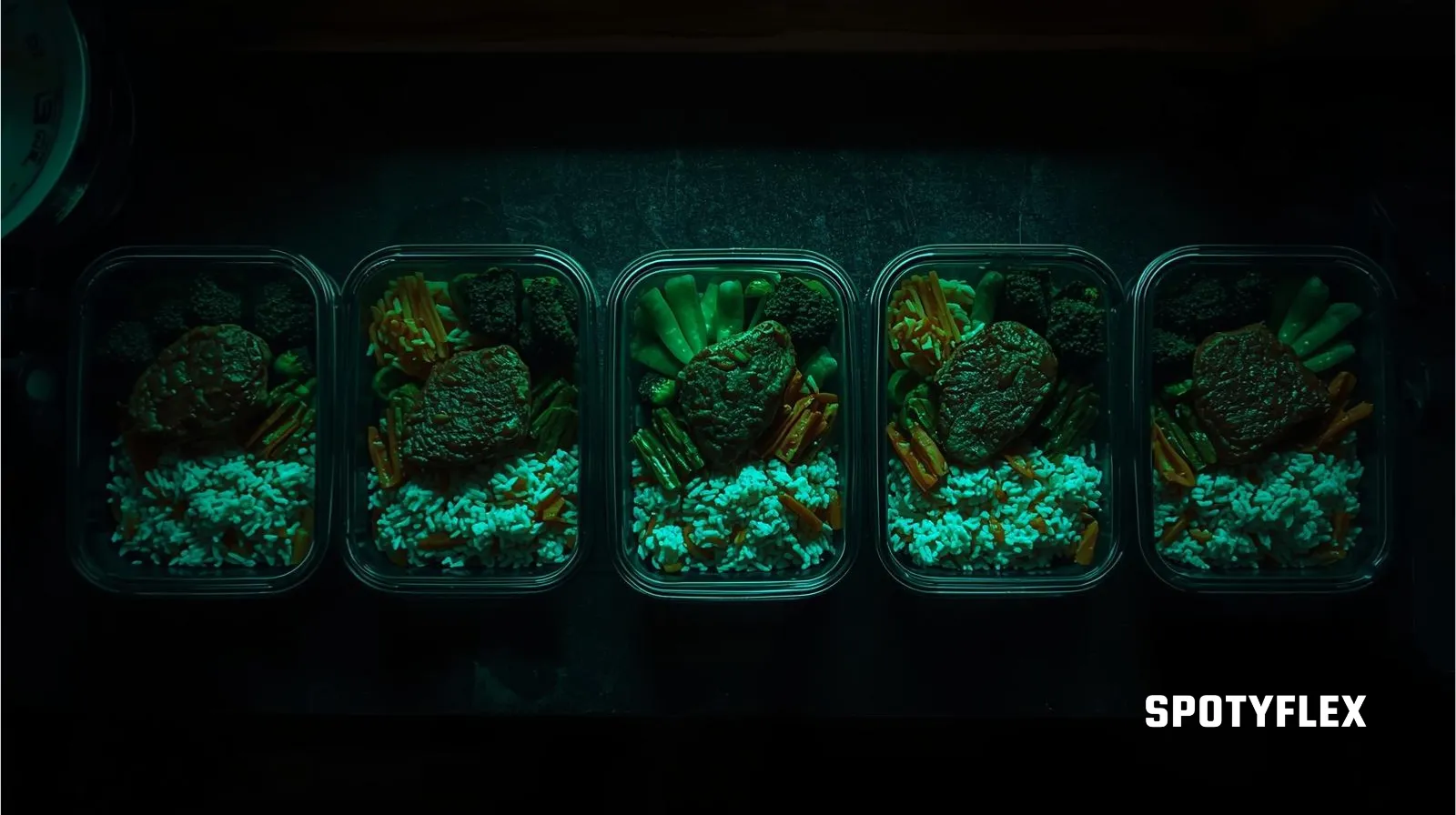
How to Structure Your Meals
Macros matter. But so does timing — especially for training performance and recovery.
Here's the simple framework that works for most people:
Breakfast — Hit protein early
Start with 30–40g of protein. Eggs, Greek yogurt, cottage cheese, or a protein shake. Most people fail their daily protein target because breakfast has too little.
Pre-workout — Carbs and protein 1–2 hours before
A solid meal with carbs gives you the glycogen to train hard. Rice and chicken, oats and a shake, pasta — anything that sits well. Don't train fasted if muscle gain is the goal.
Post-workout — Protein within 2 hours
The post-workout window is real — your muscles are primed to absorb nutrients. Hit 30–40g of protein within 2 hours of training. A shake, Greek yogurt, or a full meal all work.
Before bed — Slow-digesting protein
Casein protein, cottage cheese, or Greek yogurt before bed keeps muscle protein synthesis elevated overnight. Most of your muscle repair happens while you sleep — feed it.
A Full Sample Day of Eating
This is a sample day for an 80kg person targeting ~2,800 calories and 160g of protein. Adjust amounts to fit your own numbers.
🌅 Breakfast
~45g protein4 scrambled eggs + 200g Greek yogurt + oats with banana. Fast, protein-dense, and keeps you full until lunch.
⚡ Pre-Workout Meal
~40g protein150g chicken breast + 200g white rice + steamed broccoli. Classic. Reliable. Works.
💪 Post-Workout
~35g proteinProtein shake with milk + banana. Quick, easy, and hits the post-workout window without having to cook.
🍽️ Dinner
~45g protein200g salmon + sweet potato + mixed salad with olive oil. Healthy fats, slow carbs, and a solid protein hit before the overnight fast.
🌙 Before Bed
~25g protein200g cottage cheese. Slow-digesting casein protein. Feeds muscle repair all night.
Diet Mistakes That Slow Muscle Growth
❌ Not eating enough total calories
You cannot build muscle in a significant calorie deficit. If you're training hard and not growing, eat more. Most people chronically undereat for their training demands.
❌ Inconsistent protein
Hitting your protein on Monday and Wednesday but not the other five days doesn't work. Muscle protein synthesis requires consistent amino acid availability. Every day counts.
❌ Cutting carbs during a bulk
Low carb and muscle gain don't mix well. Carbs fuel your training. Without glycogen, workout quality drops, volume drops, and the stimulus for muscle growth drops with it.
❌ Eating all protein in one meal
Eating 160g of protein at dinner and nothing the rest of the day wastes most of it. Distribute protein across 4 meals for maximum muscle protein synthesis throughout the day.
❌ Relying on supplements over food
Protein shakes are a convenient top-up — not a replacement for real food. Whole foods come with micronutrients, fiber, and compounds that supplements don't. Build your diet around food first, use supplements to fill gaps.
The Bottom Line
Building muscle isn't complicated. But it does require consistency across a few non-negotiables:
- Eat in a small calorie surplus — TDEE + 200–300
- Hit your protein every single day — 1.6–2.2g per kg
- Keep carbs high to fuel your training
- Spread meals across the day — don't cram everything at dinner
- Stay consistent for months, not days
You don't need a perfect diet. You need a good-enough diet done consistently over a long period of time. That's what builds muscle.
Complete Your Muscle Gain System
- Slater G, Phillips SM. Nutrition guidelines for strength sports: sprinting, weightlifting, throwing events, and bodybuilding. PubMed — Journal of Sports Sciences, 2011
- Morton RW, et al. A systematic review, meta-analysis and meta-regression of the effect of protein supplementation on resistance training-induced gains in muscle mass and strength. PubMed — British Journal of Sports Medicine, 2018
- Areta JL, et al. Timing and distribution of protein ingestion during prolonged recovery from resistance exercise alters myofibrillar protein synthesis. PubMed — Journal of Physiology, 2013
- Res PT, et al. Protein ingestion before sleep improves postexercise overnight recovery. PubMed — Medicine & Science in Sports & Exercise, 2012
- Burke LM, et al. Carbohydrates for training and competition. PubMed — Journal of Sports Sciences, 2011
- Comprehensive evidence summary on calorie surplus and lean bulking. Examine.com — Muscle Gain
Written by SpotyFlex Team — We help people build real fitness habits without the BS.

/1.webp)
