

StrongLifts 5×5 is one of the most effective strength programmes ever designed for beginners — not because it's complicated, but because it isn't. Two alternating workouts, five compound exercises, three sessions per week, and a simple rule: add weight every session.
The simplicity isn't a limitation. It's the feature. Linear progression — the ability to add load to the bar every single session — is a physiological window that only exists early in your training career. StrongLifts is built specifically to exploit it before it closes.
This guide covers the full programme: how the protocol works and why, the mechanics of progressive overload, how to set up your nutrition to support it, how to handle stalls and plateaus, when and how to add accessory work, and which intermediate programmes to transition to when you've exhausted the linear progression model.
What You'll Learn
- How StrongLifts 5×5 is structured and why the programme is designed this way
- The science behind linear progression and why it works so fast for beginners
- Exact starting weights, session-by-session increases, and plateau protocols
- Nutrition targets for strength and muscle growth while on the programme
- Which accessory lifts to add and when to add them
- The best intermediate programmes to transition to after linear progression ends
Why Linear Progression Works — and Why It Only Works Once
When you first begin resistance training, your nervous system is highly undertrained. In the early weeks of a programme, the majority of strength gains come not from muscle growth but from neuromuscular adaptation — your brain and motor neurons learning to recruit muscle fibres more efficiently and coordinate movement patterns under load.[2]
This neuromuscular adaptation happens so rapidly in beginners that recovery is complete within 48–72 hours — meaning you can train again and add more weight before any plateau effect sets in. This is the physiological basis of linear progression: the training stress from each session is resolved fully before the next session, allowing you to add load every workout rather than every week.
Research confirms that this type of high-frequency, progressive loading produces superior strength gains compared to lower-frequency protocols at equivalent weekly volumes — particularly in the first 6–12 months of training.[1] StrongLifts is structured specifically to capitalise on this adaptation window before it narrows into the slower, weekly progression of intermediate programmes.
The Programme: Two Workouts, Five Exercises
StrongLifts alternates between two workouts — A and B — on a Monday / Wednesday / Friday schedule, rotating each session. The squat appears in both workouts, making it the most-trained movement at three sessions per week. Every exercise is a compound movement, meaning multiple joints and muscle groups are working simultaneously in each lift.
Workout A

Back Squat — 5×5
Bench Press — 5×5

Barbell Row — 5×5
Workout B
Back Squat — 5×5

Overhead Press — 5×5

Deadlift — 1×5
The deadlift is programmed as a single working set because it's the most taxing movement in the programme. Five sets of heavy deadlifts three times per week would accumulate systemic fatigue that interferes with recovery and progress across all other lifts. One heavy set — done with maximum intent — provides sufficient stimulus for continued progress at this stage.
The rest interval between sets should be 90 seconds minimum for upper body lifts and 3–5 minutes for heavy squat and deadlift sets. Rushing rest periods is one of the most common reasons beginners stall earlier than necessary on this programme.
Starting Weights
Beginners: Start with the empty bar (20kg / 45lbs) on all barbell exercises
Returning lifters: Use a weight you could comfortably do for 10 reps on your first session
The empty bar start feels easy — it's supposed to. The first two weeks serve as technique practice, building the motor pattern for each lift before meaningful load is applied. Ego-loading at the start is the most reliable way to develop poor form habits that limit progress later.
Progressive Overload: The Exact Progression Protocol
Progressive overload — consistently increasing the training stimulus over time — is the fundamental mechanism by which the body adapts to become stronger.[2] In StrongLifts, this is implemented through a simple, session-by-session load increase.

Squat, bench, row, press: +2.5kg every session
Deadlift: +5kg per session initially, dropping to +2.5kg as loads become significant
These increments are deliberately conservative. The goal isn't to add as much weight as possible each session — it's to sustain the progression for as long as possible. A beginner who adds 2.5kg per session, three times per week, adds 7.5kg per week to their squat. Over 12 weeks, that's a 90kg increase in squat strength from a starting point of 20kg. The compounding effect of small, consistent increments is significant.
Handling Stalls and Plateaus
Failing to complete all five reps across all five sets is a normal and expected part of running this programme. It doesn't indicate a problem — it indicates you've reached a load threshold that requires an adaptive response. StrongLifts has a built-in protocol for managing this systematically.

Missed reps: Repeat the same weight in the next session — do not progress

Failed the same weight 3 sessions in a row: Deload by 10% and rebuild

Stalled and deloaded twice on the same lift: Switch to 3×5 to reduce fatigue
Before concluding that a stall is a training issue, rule out the most common non-training causes: insufficient sleep (less than 7 hours is measurably detrimental to strength recovery), under-eating (particularly insufficient protein), and accumulated fatigue from training too close together without adequate rest days.
Many stalls are technique stalls, not strength stalls. If you miss reps on the squat, record yourself from the side and check squat depth, knee tracking, and bar position before assuming you need more recovery or less weight.
Nutrition for StrongLifts: Fuelling Linear Progression
Progressive overload requires adequate fuel. A programme that asks your body to lift more weight every 48 hours places significant demands on protein synthesis, glycogen stores, and hormonal recovery — none of which are optimally supported in a calorie deficit.
Calorie Target
For beginners looking to build strength and muscle simultaneously, a modest calorie surplus of 200–300 calories above your Total Daily Energy Expenditure (TDEE) is sufficient. Aggressive bulking produces unnecessary fat gain without meaningfully accelerating strength progress. If fat loss is the priority, maintain a slight deficit — but expect strength gains to slow around weeks 6–8, as the programme's demands increasingly exceed what a restricted diet can support.[4]
Protein
Target 1.6–2.2g of protein per kilogram of bodyweight daily. This range consistently appears in the meta-analysis literature as the threshold above which additional protein produces diminishing returns for muscle protein synthesis.[3] For a 75kg individual, that's 120–165g of protein per day — achievable with consistent protein sources across meals: eggs, chicken, fish, Greek yoghurt, cottage cheese, legumes, and whey protein where needed.
Carbohydrates
Carbohydrates are your primary fuel for high-intensity resistance training. Glycogen — stored carbohydrate in the muscles and liver — is the dominant energy substrate for five heavy sets of squats. Under-eating carbohydrates while running a high-frequency programme like StrongLifts results in sessions where energy and strength output are visibly reduced. Prioritise complex, slow-digesting carbohydrate sources:
Oats
Rice
Pasta
Potatoes
Legumes
Whole Grain Bread
Fruit
Vegetables
Tracking Your Intake
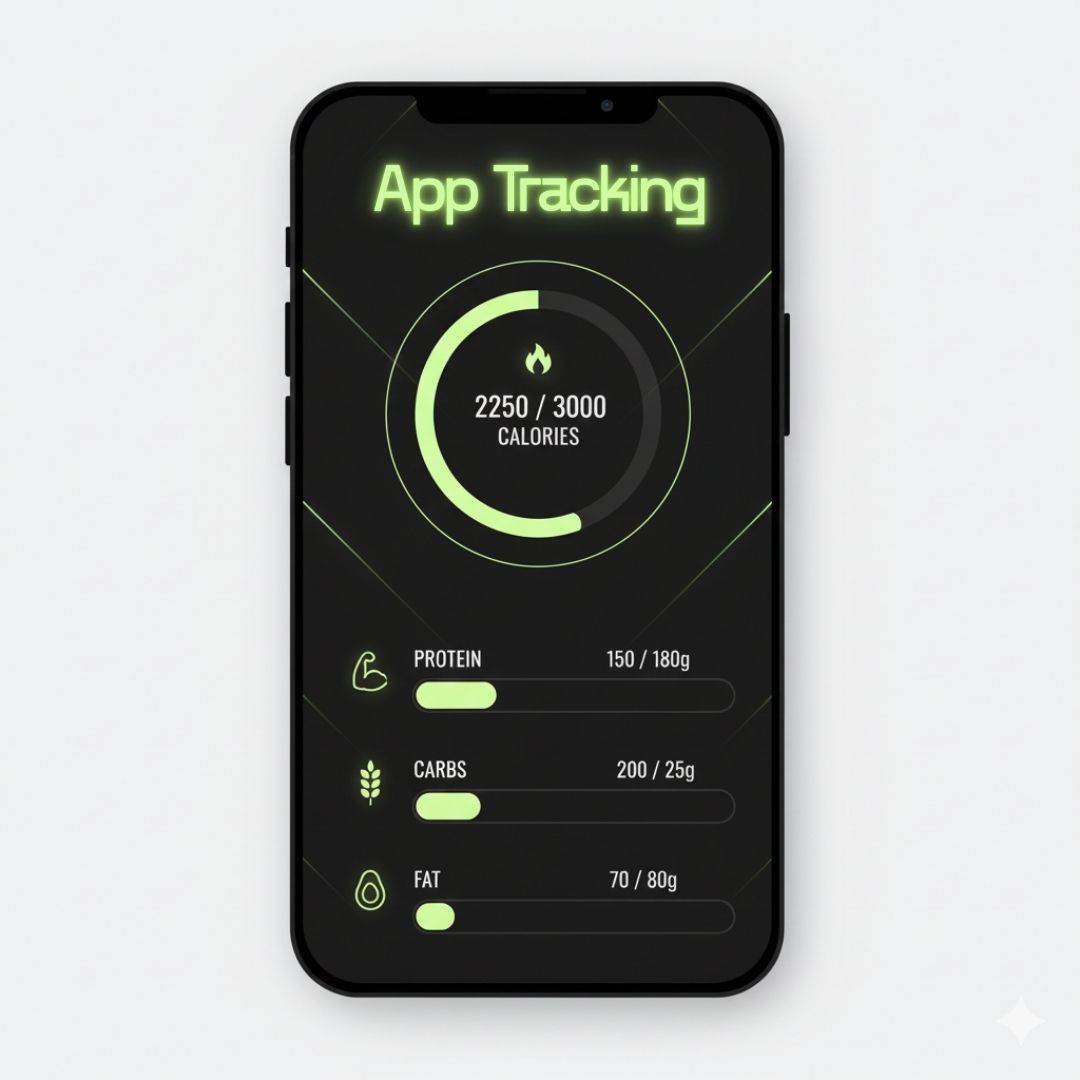
Apps like MyFitnessPal or Cronometer allow you to calculate your TDEE and track daily intake against your protein and calorie targets. You don't need to track forever — 4–6 weeks of consistent logging is typically enough to develop an accurate intuition for portion sizes and macronutrient content of regular meals.
Common Criticisms and How to Address Them
StrongLifts is an excellent beginner programme, but it has known structural limitations. Understanding them helps you modify intelligently rather than abandoning the programme unnecessarily.
| Criticism | Why It Happens | Practical Fix |
|---|---|---|
| Volume is high for absolute beginners | 5×5 is a significant load for untrained individuals | Start at 3×5 for the first 2–3 weeks, then progress to 5×5 |
| Deadlift volume is low (1×5) | By design — deadlift fatigue is systemic | Add Romanian Deadlifts as accessory work once main lifts are established |
| Bench press progress slows first | Upper body recovers slower than lower body | Add 1–2 sets of chest-focused accessory work after the main session |
| Squatting 3× per week causes knee fatigue | Form breakdown under accumulated fatigue | Prioritise mobility work, extend rest between squat sets to 4–5 minutes |
| No pulling volume for back width | Barbell rows alone don't develop the lats effectively | Add pull-ups or lat pulldowns as accessory work 2× per week |
Accessory Work: What to Add and When
Accessory exercises should not be added until the main lifts feel technically consistent and recoverable — typically after 4–6 weeks on the programme. Adding accessories too early increases session length and recovery demands at the exact point where form on the main lifts still requires full attention.[5]
When you do add them, limit each accessory to 2–3 sets of 8–12 reps and perform them after the main session — never before. The compound lifts are the priority; accessories exist to fill gaps, not compete with the primary stimulus.
Pull-ups / Lat Pulldowns
Dips
Bicep Curls
Triceps Pushdowns
Romanian Deadlift
Glute Bridges
Lateral Raises
Ab / Core Work
After StrongLifts: Transitioning to Intermediate Programming
Most lifters can run linear progression for 6–12 months before the model is fully exhausted. The signal that it's time to transition is repeated stalling on multiple lifts despite adequate sleep, nutrition, and deload protocols. At this point, your neuromuscular system has adapted enough that 48-hour recovery is no longer sufficient — progression must slow to a weekly rather than session-by-session basis.
Madcow 5×5 — weekly progression, direct StrongLifts successor
Texas Method — volume / recovery / intensity weekly wave
Wendler 5/3/1 — percentage-based monthly progression cycles
GZCLP — tiered volume system, highly adaptable for intermediate lifters
The strength base built through 6–12 months of StrongLifts makes all of these programmes immediately accessible. The compound movement patterns, work capacity, and load tolerance developed through consistent 5×5 training translate directly — the transition is an evolution, not a restart.
Conclusion
StrongLifts 5×5 works because it aligns the programme's structure with beginner physiology: high frequency, full-body compound movements, and a session-by-session progression model that turns biological adaptation into a systematic, trackable process. The simplicity isn't a compromise — it's what allows the programme to be run consistently for months without complexity becoming a barrier.
Track every session. Add weight as prescribed. Sleep adequately. Eat enough protein. Those four variables account for the vast majority of outcomes on this programme. Everything else is refinement.
Ready to take your training further? Explore more science-backed strength guides here.
Scientific References
- Ralston GW, et al. The Effect of Weekly Set Volume on Strength Gain: A Meta-Analysis. Sports Medicine, 2017. PubMed ↗
- Schoenfeld BJ, et al. Strength and Hypertrophy Adaptations Between Low- vs. High-Load Resistance Training. Journal of Strength and Conditioning Research, 2017. PubMed ↗
- Morton RW, et al. A systematic review, meta-analysis and meta-regression of the effect of protein supplementation on resistance training-induced gains in muscle mass and strength. British Journal of Sports Medicine, 2018. PubMed ↗
- Helms ER, et al. Evidence-based recommendations for natural bodybuilding contest preparation: nutrition and supplementation. Journal of the International Society of Sports Nutrition, 2014. PubMed ↗
- Krieger JW. Single vs. multiple sets of resistance exercise for muscle hypertrophy: a meta-analysis. Journal of Strength and Conditioning Research, 2010. PubMed ↗