



Be honest.
Have you ever walked into the gym with zero plan and thought,
"Eh… I'll just do whatever feels right today"?
Yeah. We've all been there.
But here's the thing, random workouts give you random results. If you want real progress (fat loss, muscle, strength, confidence, all that good stuff), you need a simple weekly plan.
Don't worry. This isn't going to be complicated or "science lecture" vibes. I'll break it down like I would for a friend.
Let's build your workout plan the smart way.
Figure Out What You Actually Want
Before picking exercises, ask yourself one simple question:
What's the goal?

If you want strength → heavier weights, lower reps.
If you want muscle → moderate weight, moderate reps.
If you want fat loss → lifting + nutrition matters more than endless cardio.
You don't need a 10-page strategy. Just be clear about what you're chasing.
No goal = no direction.
Pick a Weekly Split (Keep It Realistic)
This is just how you divide your workouts during the week.

Perfect if you're busy or just starting.
Example:
You train your whole body each day. Simple. Effective. Hard to mess up.
This is a sweet spot for a lot of people.
Example:
More volume. Still enough recovery.
Chest/Shoulders/Triceps · Back/Biceps · Legs
Great… but only if you can actually recover and stay consistent.
If you're new, don't jump into a 6-day program just because some shredded guy on Instagram does it. Start simple. Win small first.
Choose the Right Exercises (Don't Overcomplicate This)
Here's the rule:
Start with big movements.
These are your money exercises:

They work multiple muscles at once and give you the biggest return for your effort.
After that?
Add a few smaller exercises:
That's it.
You don't need 12 exercises in one workout.
4–6 solid movements is more than enough.
Remember: more exercises doesn't mean more gains. It usually just means you're tired and confused.
How Many Sets & Reps?
Let's keep it super simple:
| Goal | Reps | Rest |
|---|---|---|
| Strength | 4–6 reps | 2–3 minutes |
| Muscle | 8–12 reps | 60–90 seconds |
| Endurance | 12–15+ reps | Shorter rest |
You don't need crazy math. Just stay consistent and try to improve over time.
The Most Important Thing | Progressive Overload
This sounds fancy. It's not.
It just means:
Do a little more over time.
That could mean:

If you lift the same weight for the same reps for 6 months… your body has no reason to change.
Track your workouts. Use notes on your phone if you have to. Guessing doesn't build muscle.
Don't Ignore Recovery
This is where a lot of people mess up.
You don't grow in the gym.
You grow when you recover.
That means:
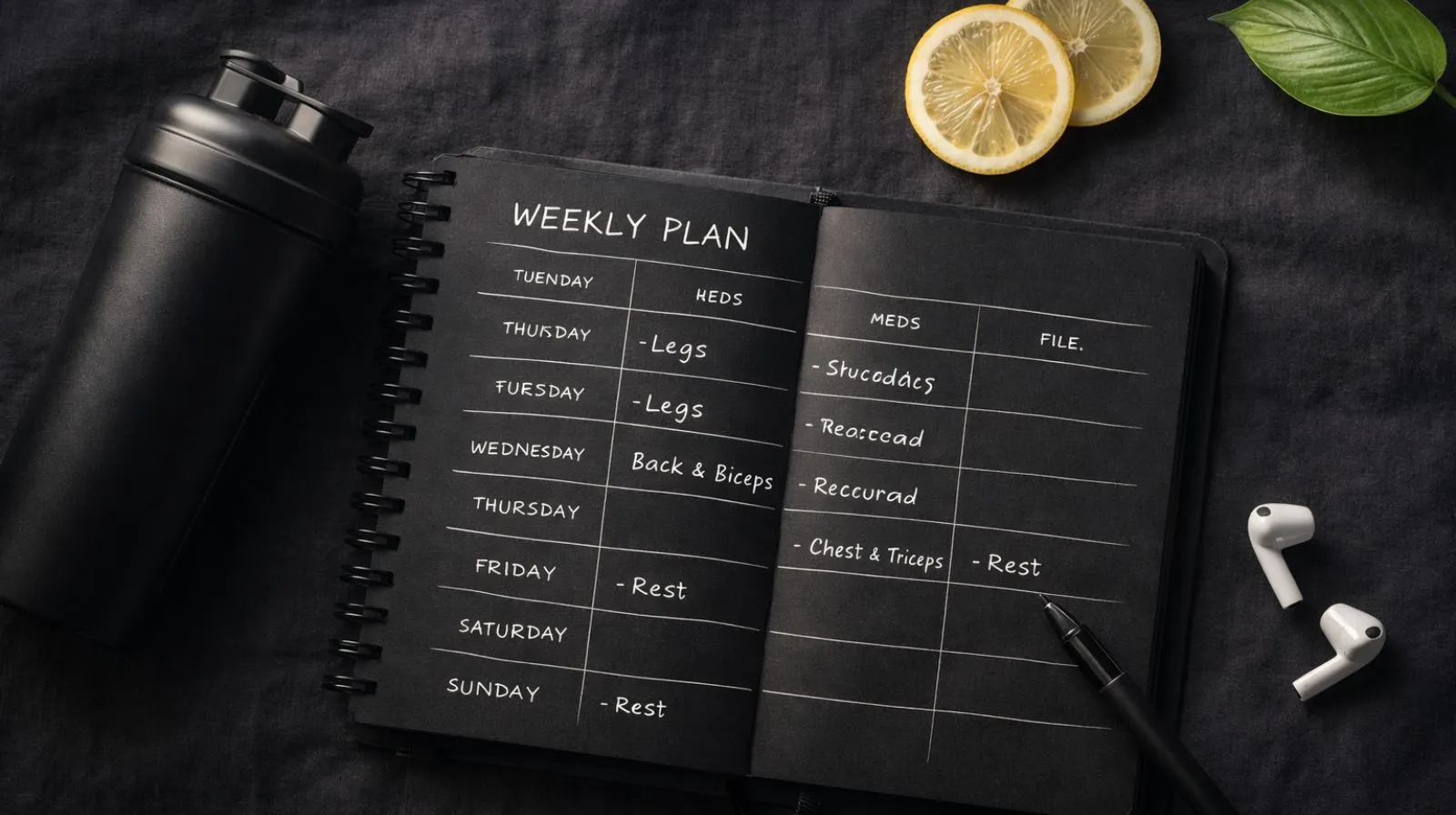
Training 6 days a week but sleeping 5 hours and eating like a bird?
Yeah… that's not a growth strategy.
Recovery is part of the plan.
Common Mistakes (Let's Avoid These)
Example Beginner 3-Day Plan
That's it. Nothing fancy. It works.
Example 5-Day Split (If You're More Advanced)
Higher volume, more focus, still structured.
Final Thoughts
You don't need the "perfect" workout plan.
You need:
- A clear goal
- A simple structure
- Consistency
- Patience
That's it.
The best workout plan isn't the most complicated one.
It's the one you actually stick to.
Start simple. Track progress. Improve slowly.
And remember, fitness isn't about destroying yourself every session. It's about stacking small wins until you look in the mirror one day and go,
"Okay… this is working."
Thanks for Reading!
If this guide helped you, we'd love to hear from you.
Leave a Comment
Share your thoughts, ask questions, or tell us about your workout journey. Your feedback helps us create better content.
Check Out Our Guides
Explore more in-depth articles and fitness strategies designed to help you reach your goals.
View All Guides →More Articles
Nutrition tips, workout breakdowns, recovery strategies, and everything fitness-related in one place.
Read Articles →Stay consistent. Keep improving. Build the fitness you actually want.
- Kraemer WJ, Ratamess NA. Fundamentals of resistance training: progression and exercise prescription. PubMed — Medicine & Science in Sports & Exercise, 2004
- Schoenfeld BJ. The mechanisms of muscle hypertrophy and their application to resistance training. PubMed — Journal of Strength and Conditioning Research, 2010
- Rhea MR, et al. A meta-analysis to determine the dose response for strength development. PubMed — Medicine & Science in Sports & Exercise, 2003
- Dattilo M, et al. Sleep and muscle recovery: endocrinological and molecular basis for a new and promising hypothesis. PubMed — Medical Hypotheses, 2011
Younes Ouba
Founder of SpotyFlex, Full-Stack Developer & lifelong fitness enthusiast. I build the platform and the content. The goal is always the same: real fitness knowledge, zero BS.

/1.webp)
